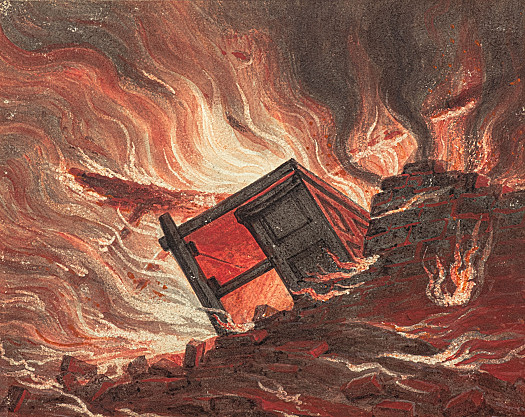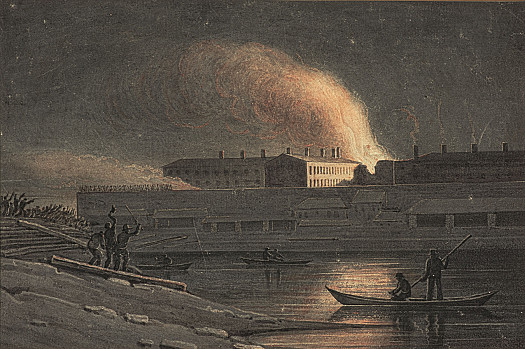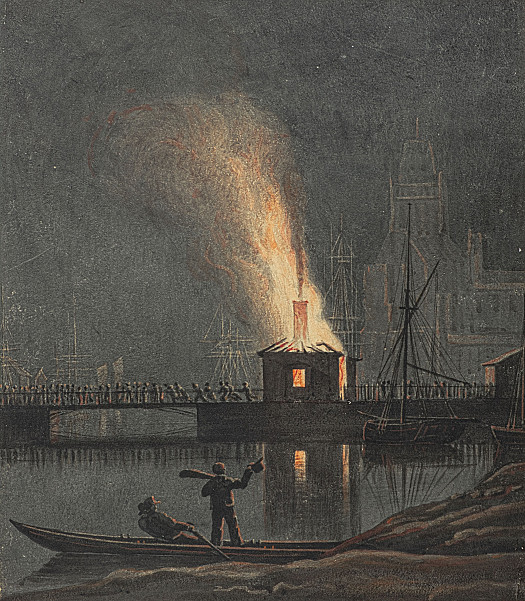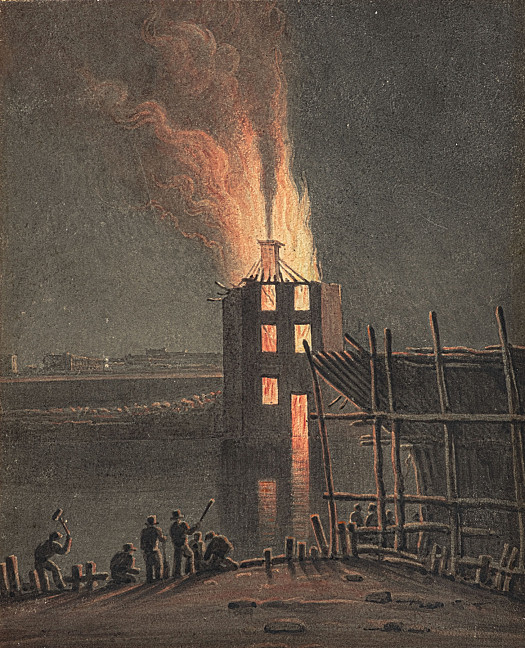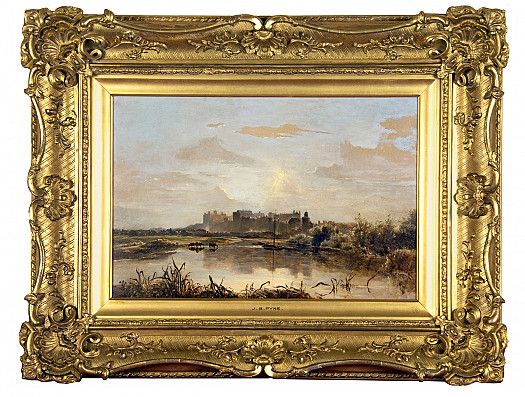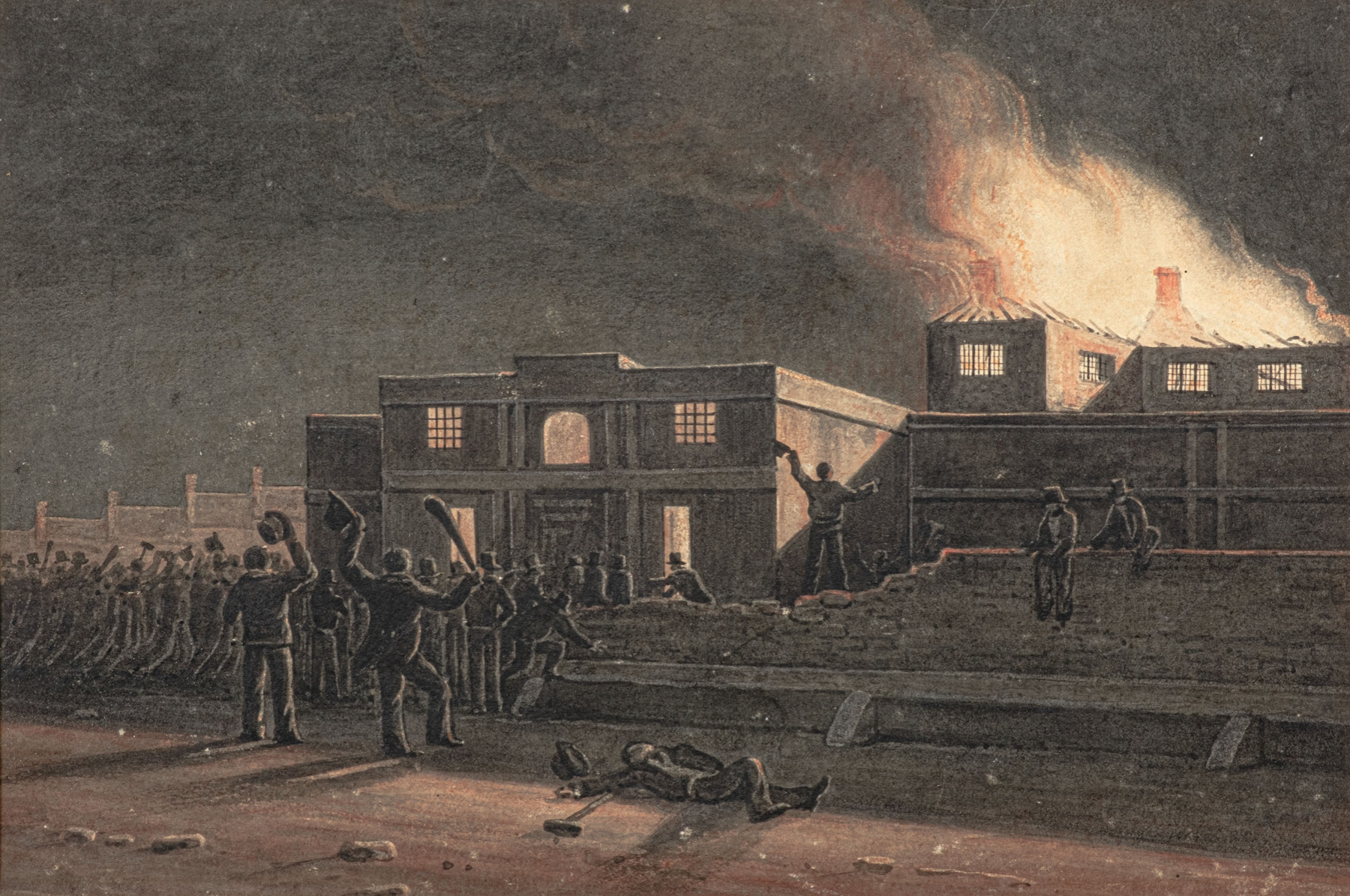
(click image to enlarge)
PRICE IS £4,500 FOR THE FIVE JAMES BAKER PYNE ARTWORKS
BRISTOL RIOTS, OCTOBER 1831
The Bristol Riots took place from 29 - 31 October 1831 in response to the voting down of the second Reform Bill in the House of Lords and the subsequent arrival in the city of the anti-reform judge and
MP, Sir Charles Wetherell.
In 1831, only those who were at least 40-shilling freeholders had the right to vote, which equated to just 5% of the population of England and Wales. The Reform Bill would have created new constituencies, disenfranchised many rotten boroughs and broadened the qualification threshold, giving the vote to a much greater proportion of the population. In Parliament, Bristol's Recorder and senior judge Sir Charles Wetherell (who was also MP for Boroughbridge) had stated that the people of Bristol were against reform, when in fact the city had gathered over 17,000 signatures to a petition supporting the Bill.
From 10 - 12 October, public meetings took place in Bristol's Queen Square to demonstrate against the blocking of the Reform Bill.29 October, full-scale rioting broke out and demonstrators held the city for the next two days. Two cavalry units, the 3rd and 14th Dragoons, as well as a unit of special volunteer constables, were dispatched to control the crowds. In clashes between the Dragoons and the rioters a number of men were killed and in the chaos, the officer in charge believed that many of the soldiers were actually causing more of the trouble and withdrew them from the city.
Over the course of the two days of rioting, the wine cellar of the Mansion House was looted and the building set on fire, the Bridewell Jail and Lawford's Gate Prison were broken into and prisoners set free, and the Tollhouses, the Bishop's Palace and the Custom House were all attacked and set alight. It is said that Sir Charles Wetherell was able to escape the rioting by dressing as a woman.
By the time the rioting was quelled by the 3rd Dragoons on 31 October, it is estimated that around £300,000 worth of damage had been caused and as many as 250 people had been killed. Many rioters were put on trial in January 1832, with seven men transported to Australia, 43 imprisoned and four were hanged (one other was sentenced to death but was reprieved).
In 1831, James Baker Pyne was living at 11 Wellington Place, Stapleton Road, Bristol and experienced the riots first hand. He and several other Bristol artists such as Thomas Leeson Rowbotham, Samuel Jackson and William Müller produced drawings of the riots that were reproduced as lithographs for publication.
8 & 10 Ryder Street, St James’s, London SW1Y 6QB
gallery@chrisbeetles.com
020 7839 7551
© Chris Beetles Ltd 2026 | Accessibility | Privacy | Sitemap