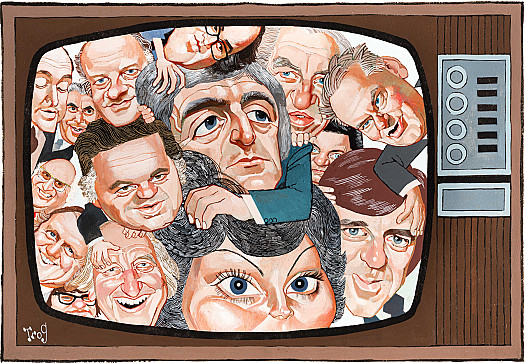
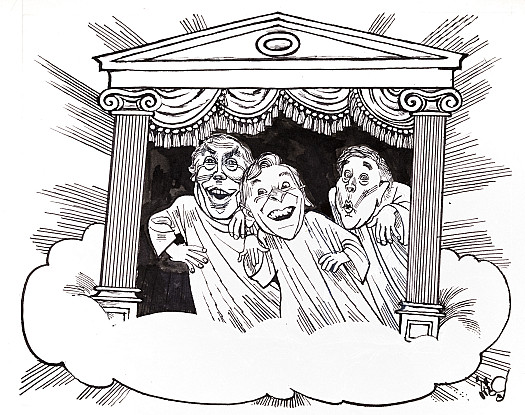
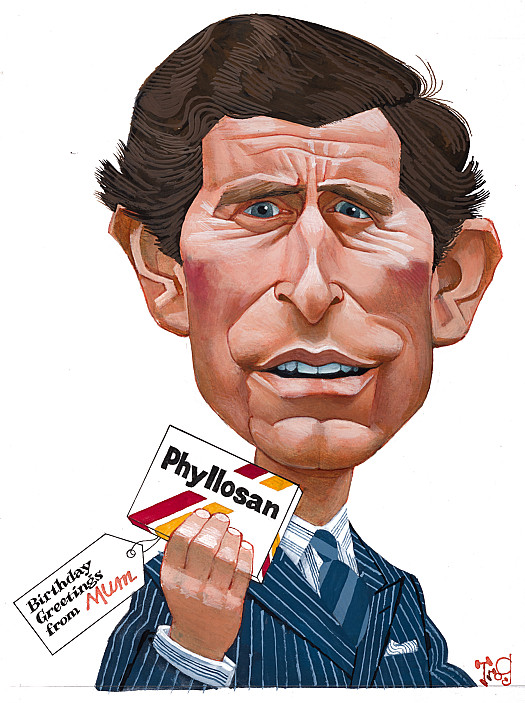
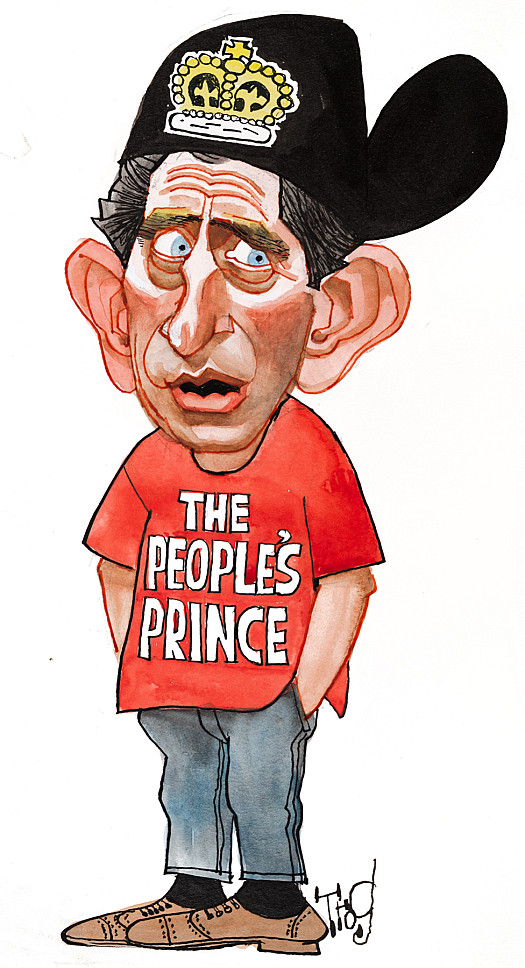
Wally Fawkes was born Walter Ernest Fawkes on 21 June 1924 in Vancouver, Canada, the son of Douglas Pearsall, a railway clerk, and Mabel (neé Ainsley). His parents separated when he was young, and in 1931 he moved with his mother and his stepfather, Charles Fawkes, a printer, to Britain.
Educated at Sidcup Central School in south-east London, he left in 1938 at the age of fourteen with a scholarship to study at Sidcup Art School. He left after just eighteen months in order to help his family financially with a series of odd jobs, and after the outbreak of war in 1939, he was employed to paint camouflage on factory roofs at the Woolwich Docks to protect them from bombing raids. A bout of pleurisy kept Fawkes from being called up, but instead in 1941 he was employed to trace maps of coal seams for the Coal Commision. The following year, he entered a Coal Commission art competition and came to the attention of the Daily Mail’s Political Cartoonist, Leslie Illingworth, who was one of the judges. Illingworth got Wally Fawkes a job in the Clement Davies advertising agency, and on his twenty-first birthday, in June 1945, found him a job at the Daily Mail, drawing column-breakers and decorative illustrations. In 1947, Fawkes began studying part-time at Camberwell School of Art, under John Minton. There, he was a contemporary of Humphrey Lyttelton and Francis Wilford-Smith, who would become the cartoonists ‘Humph’ and ‘Smilby’.
Though Wally Fawkes had shown a love of comics and an aptitude for drawing that had been encouraged by his mother from a young age, he had also grown up with a passion for jazz and was a highly talented, self-taught jazz clarinettist. He had started a jazz band called ‘The Troglodytes’, a name inspired by spending so much time in air raid shelters during the war that he had felt like a troglodyte. This would also become the inspiration for his pen name ‘Trog’. In 1947, he joined the ‘George Webb Dixielanders’, which also featured Humphrey Lyttleton on the trumpet. The following year, Lyttleton left to form his own band, and Wally Fawkes joined him. ‘Humphrey Lyttleton and His Band’ became one of leading jazz bands in the country, with Sidney Bechet, the legendary New Orleans saxophonist, declaring that Wally Fawkes was the best clarinettist in the world.
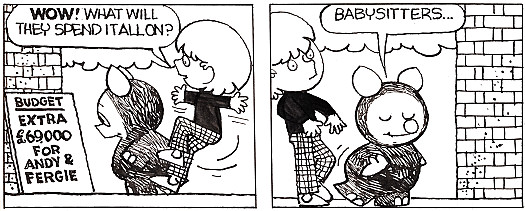
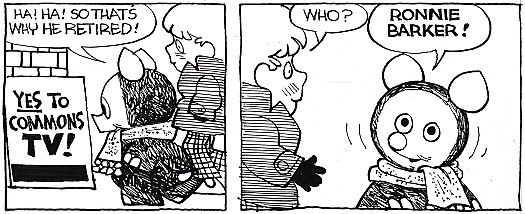
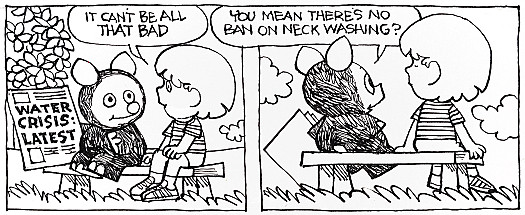
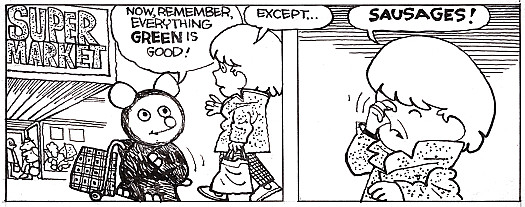
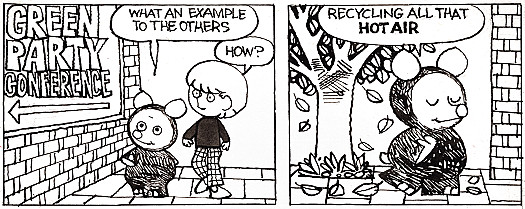
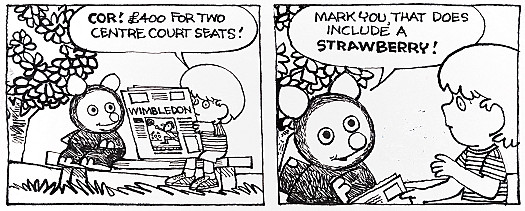
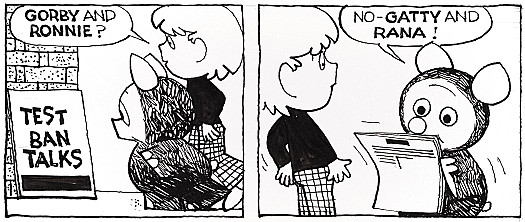
In 1948, during a visit to New York, the owner of the Daily Mail, Lord Rothermere, came across a syndicated cartoon strip by David Johnson Leisk called ‘Barnaby’, featuring a young boy and a fairy godmother figure called Mr O’Malley. Rothermere returned to England with the idea to develop a cartoon with a similar set up, and Wally Fawkes was tasked with illustrating it. The cartoon, ‘Rufus’, first appeared on 25 April 1949. In an early strip, Rufus discovers a magical creature called Flook, and shortly after, the strip became ‘Rufus and Flook’, and finally ‘Flook’. The strip would become one of the Daily Mail’s most popular attractions, and in 1951, an attempt was made to syndicate the strip in the United States. Fawkes drew ‘Flook’ for the Daily Mail for 35 years, assisted by several authors, including Robert Raymond, Compton Mackenzie, Humphrey Lyttleton, George Melly, Barry Norman and Barry Took. In 1979, Margaret Thatcher called the cartoon ‘quite the best commentary on politics of the day’.
In 1949, Wally Fawkes married Sandy Boyce-Carmichelle, a fellow art student. Together they had four children, one of whom died in infancy. They divorced in 1964 and the following year he married Susan Clifford. Together they had a daughter, Lucy, and a son, Daniel.
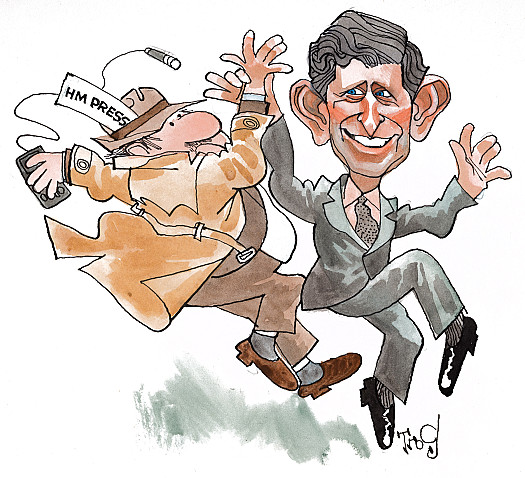
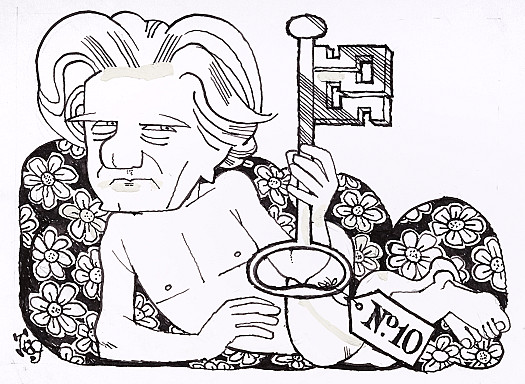
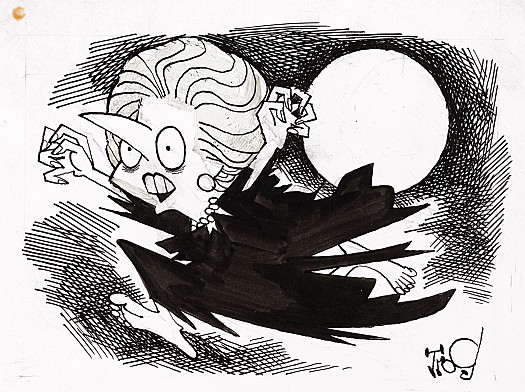
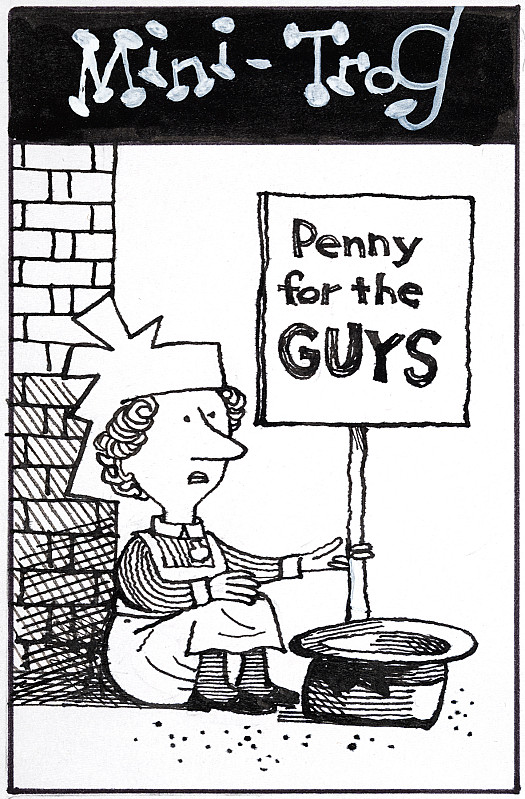
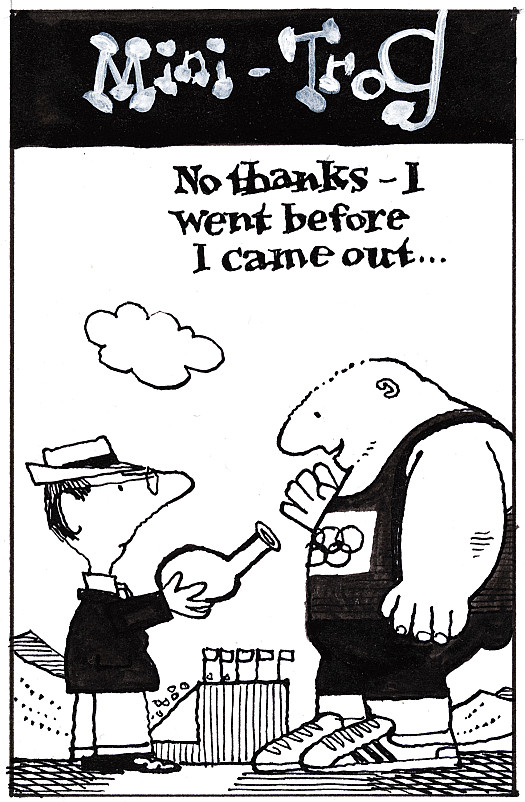
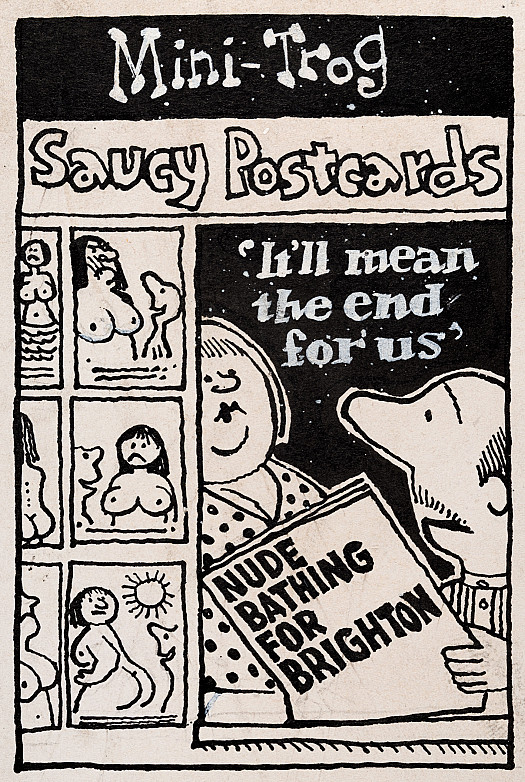
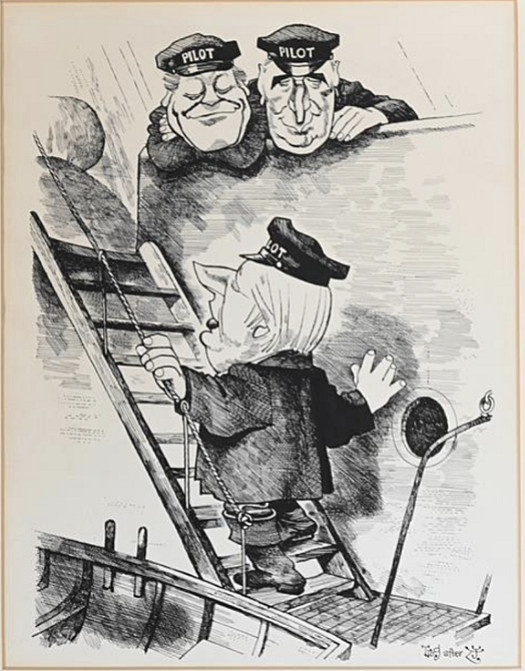
Wally Fawkes began contributing political cartoons to the Spectator in 1959, from 1961 to 1964 was an occasional contributor to Private Eye and from 1962 was also producing cartoons for the New Statesman. In addition to the regular ‘Flook’ strip, he also began drawing larger political cartoons in the Daily Mail, though the arrival in 1965 of Gerald Scarfe to the paper limited his contributions, and instead he began submitting political cartoons to the Observer. However, by 1967 it became clear that Scarfe was not happy at the Mail and as Fawkes’ position became more secure, he stopped contributing to the Observer the following year. In 1969, Leslie Illingworth retired as political cartoonist at the Daily Mail and recommended his protégé Fawkes as his successor and he took up the role in 1970. He held the role only until the following year, as the Daily Mail absorbed the Daily Sketch, whose editor, David English, took charge of the combined paper and dropped Wally Fawkes in favour of the Daily Sketch cartoonist Stan ‘Mac’ McMurtry. Fawkes returned to the Observer, where he began drawing two cartoons a week, a large political cartoon and a ‘Mini-Trog’ on the front page. In 1969, Wally Fawkes also replaced Leslie Illingworth as political cartoonist at Punch, and from 1971 his work began appearing regular on the magazine’s cover.
Throughout the 1960s and 70s, ‘Flook’ continued to appear in the Daily Mail, but by the 1980s, Fawkes was growing disillusioned with the paper’s politics and was often at odds with the editor, Sir David English. The strip had been reduced in size, transferred to the sports pages and eventually, in July 1984, Fawkes was given his three months’ notice. The same month, Robert Maxwell had purchased the Daily Mirror, and he quickly moved to bring Fawkes to the paper. Maxwell advised Fawkes to take the copyright of Flook in place of severance pay, and so Flook first appeared in the Daily Mirror in October 1984. The strip lasted only a year in the Daily Mirror, before being transferred to the Sunday Mirror in November 1985, before being dropped. In 1986, Wally Fawkes joined the new tabloid Today, but a few months later left to join the London Daily News. The London Daily News first appeared in 1987, but lasted just a few months. His cartoons continued to appear in Punch and Private Eye, and his weekly ‘Mini-Trog’ continued in the Observer until 1996, when he left to join the Sunday Telegraph. The following year, he also began producing cover artwork for The Week. In 1997, he was presented with the Cartoon Art Trust’s Lifetime Achievement Award. In 2001, he received an Honorary Doctorate from the University of Kent.
In June 2005, with his eyesight failing, he retired from the Sunday Telegraph and from cartooning, though he continued to play the clarinet. Wally Fawkes died after a short illness on 1 March 2023.